Kottayam Police Station
The God of Small ThingsKottayam Police Station is where private loss becomes an official version of events, and where that version is enforced against those with the least power to challenge it. Ammu comes seeking to correct Baby Kochamma’s accusation against Velutha, but Inspector Thomas Mathew refuses to hear her and humiliates her; later, the station’s officials act on the accusation, and Estha is made to confirm Velutha’s identity after finding him gravely injured in custody. The station thus joins the family’s grief to caste authority, police procedure, and the children’s enduring trauma.
The Station and Its Authority
When Ammu brings the twins back after the funeral, the station is already familiar to them: they had spent much of the previous day there. Expecting the sharp smell that permeates its walls and furniture, they close their nostrils before they enter. The children’s anticipation marks the place not as a neutral civic office but as an environment they have learned to fear.
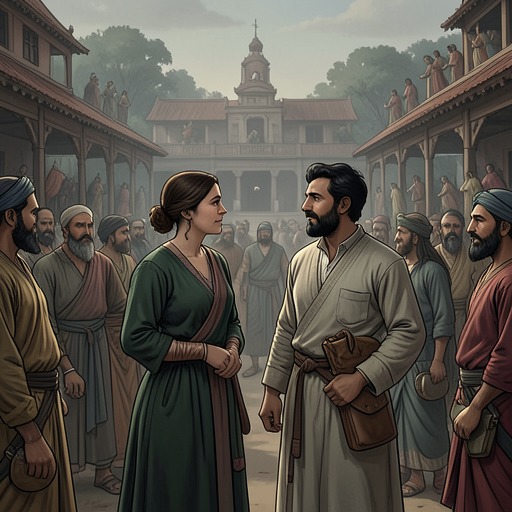
Ammu asks to speak to the Station House Officer, explains that a terrible mistake has been made, and requests a chance to give a statement and see Velutha. Inspector Thomas Mathew receives her appeal with contempt. His attention is not on her account: he stares at her body, invokes the police’s refusal to take statements from women he labels disreputable and their children, and tells her to go home. When she persists, he approaches and taps her with his baton. His conduct makes the station’s authority personal and gendered: the official who could hear her instead uses his position to intimidate and degrade her.
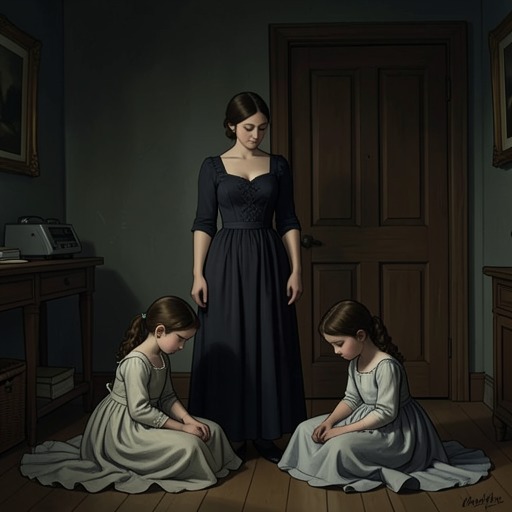
The episode also establishes the limits of Ammu’s ability to seek redress. She leaves crying, her face rigid as tears run down it. Estha and Rahel have never seen their mother cry before, and her distress makes the crisis real to them. They do not ask what the insults directed at Ammu and her children mean. On the bus back to Ayemenem, Ammu tells the conductor that Velutha is dead and that she has killed him; Estha quickly supplies their destination before the conductor loses patience. The return journey carries the station’s encounter into the family’s life rather than resolving it.
A False Account Becomes an FIR
The station has already been used to establish the story that will justify action against Velutha. Baby Kochamma tells Inspector Thomas Mathew that a Paravan factory worker tried to force himself on her divorced niece, Ammu, and presents the allegation as connected to a dead child and two missing children. Her purpose is to contain scandal and protect the family’s standing, not to defend Ammu. As she recounts the claim, she begins to believe the story she has constructed.
Baby Kochamma’s account joins details of Velutha’s life to a narrative of supposed insolence and danger. She says that her family educated him, trained him as a carpenter, and provided the house in which he lived; in her telling, these acts establish that he owes everything to the family. Inspector Thomas Mathew responds that people like the family first elevate such workers and then seek police help when they misbehave. His remark does not challenge the accusation. Instead, it accepts the hierarchy that makes the family’s claim to authority seem natural and Velutha’s independence suspicious.
She also invokes Velutha’s participation in a march and rumors that he had been a Naxalite, while describing signs of rudeness and insolence. The Inspector supplies her with police tea and helps her set down the accusation in a First Information Report, assuring her that the police will catch Velutha. The formal document gives institutional weight to a distorted account. The distinction between allegation and fact becomes especially consequential because the person making the allegation controls the report and the person accused is a Paravan with few avenues of protection.
Political Calculation and the Search for Velutha
Inspector Thomas Mathew does not treat the case as only a family complaint. He sends a jeep to bring Comrade K. N. M. Pillai to the station because he wants to know whether Velutha has political backing and whether pursuing him could provoke conflict with the Marxist government. Though the Inspector is a Congress man, his concern is to avoid political risk. The police station therefore serves as a meeting point between state power and local party politics, with the treatment of Velutha shaped by calculations that do not require either man to seek the truth.
The exchange between the Inspector and Comrade Pillai is brief. Pillai admits knowing Velutha but withholds that Velutha belongs to the Communist Party and that he came to Pillai’s house the previous night. He does not contradict the accusation in the report; instead, he assures the Inspector that Velutha lacks party protection and is on his own. The omission matters: the Inspector has sought to determine whether Velutha has allies, and Pillai’s answer leaves him more exposed. The two men need not trust one another to understand how their separate interests can converge.
Estha, Testimony, and the Cost of the Official Story
When the police later bring Estha and Rahel to the station, Inspector Thomas Mathew sends for two Coca-Colas and has them served to the muddy children across his desk. For Estha the drink becomes another instance of fear associated with the station. The children’s small actions with the straws—Estha burping, Rahel giggling and spilling her drink—sit uneasily beside the official business taking place around them. Estha reads the words on the wall backward, a child’s response within a room governed by adult commands and records.
As the Inspector learns more from the children and the objects his men have reported, he realizes that the case does not match Baby Kochamma’s account. He summons her and tells her that the police acted on the basis of her FIR, that Velutha has been caught and badly injured, and that he is unlikely to survive the night. The children, he explains, say that they left of their own accord, that their boat capsized, and that the English child drowned accidentally. This leaves the police facing the death in custody of a man who, in the legal account now available, is technically innocent. The Inspector’s concern is framed around the consequences for the police, not a recovery of what Velutha has lost.
The final confrontation at the station turns that concern into pressure on a child. Estha is taken to see Velutha in the lock-up. He sees that Velutha has been badly beaten and recognizes him; the Inspector asks his question, and Estha’s mouth says yes. The narrative marks the moment as the departure of childhood and the arrival of silence. The station has not merely recorded an accusation: through the child’s coerced confirmation, it has helped make the official story bearable for those in power while leaving Estha with a lasting trauma.
The Station as a Machinery of History
The station’s separate episodes reveal a pattern rather than a single procedural failure. Ammu’s attempt to correct the record is dismissed, while Baby Kochamma’s accusation is heard, written down, and acted upon. The Inspector tests whether Velutha has political protection, and Comrade Pillai’s omission helps establish that he is alone. Once the children’s account exposes the mismatch between the accusation and events, the central problem for the police is their responsibility for a death in custody.
The novel places what the twins witness within a larger account of history as the pursuit of structure, order, and complete control. What happens is described as no accident or private settling of scores but an era imposing itself on those who live through it. Kottayam Police Station gives that force a local address: reports, questions, official discretion, and the handling of witnesses turn caste hierarchy into practical power. Its institutional rooms hold both the record that distorts events and the child whose brief answer helps seal the consequences.